20.07.2026
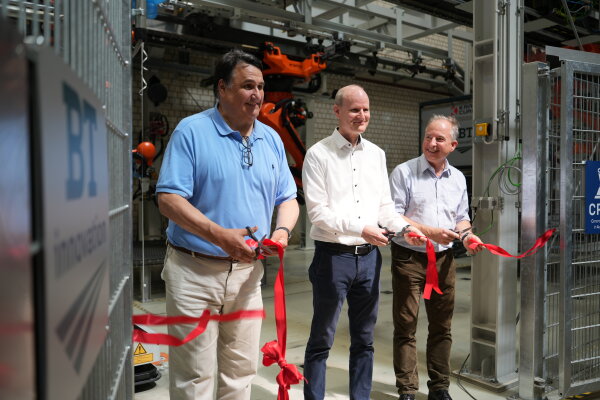
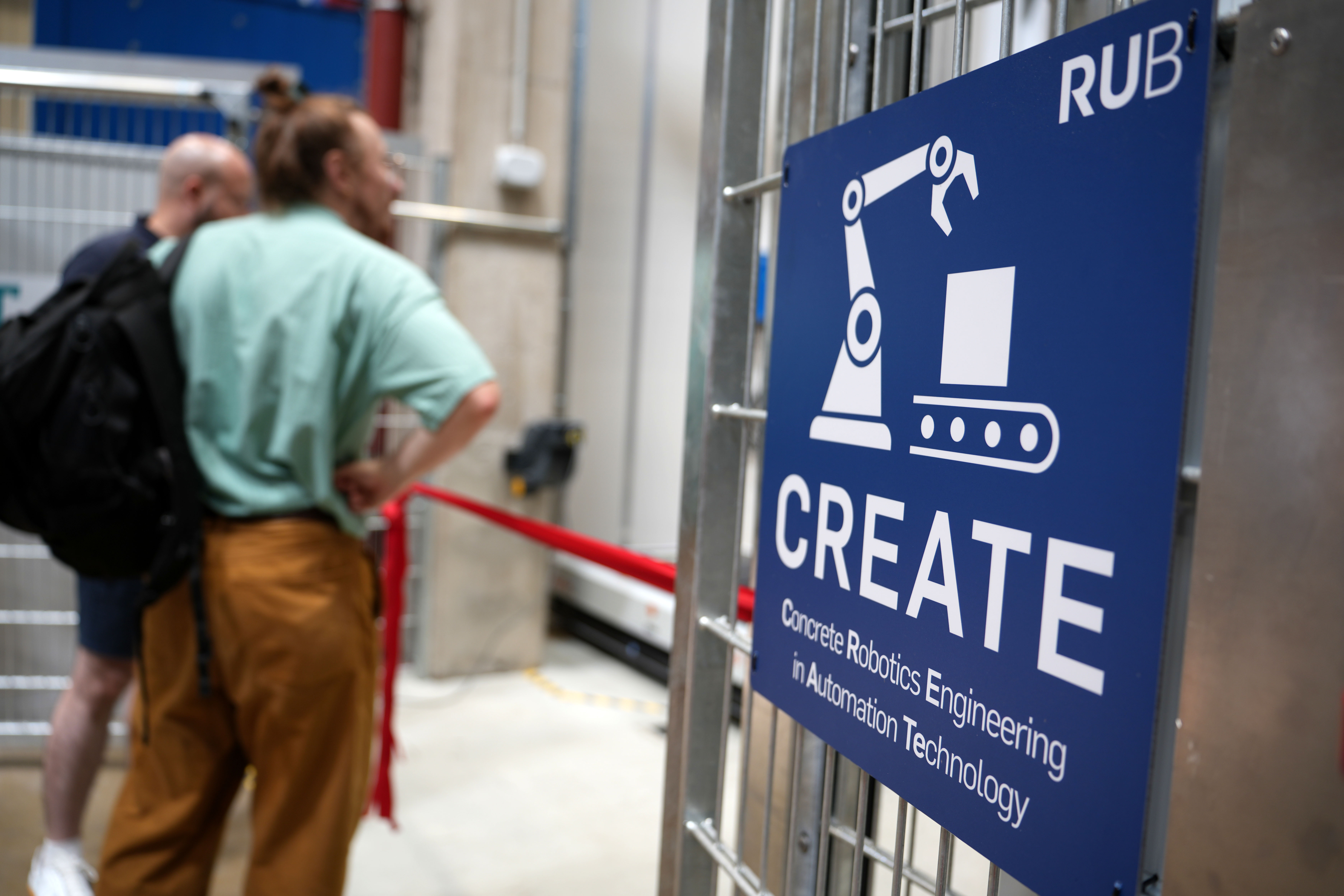
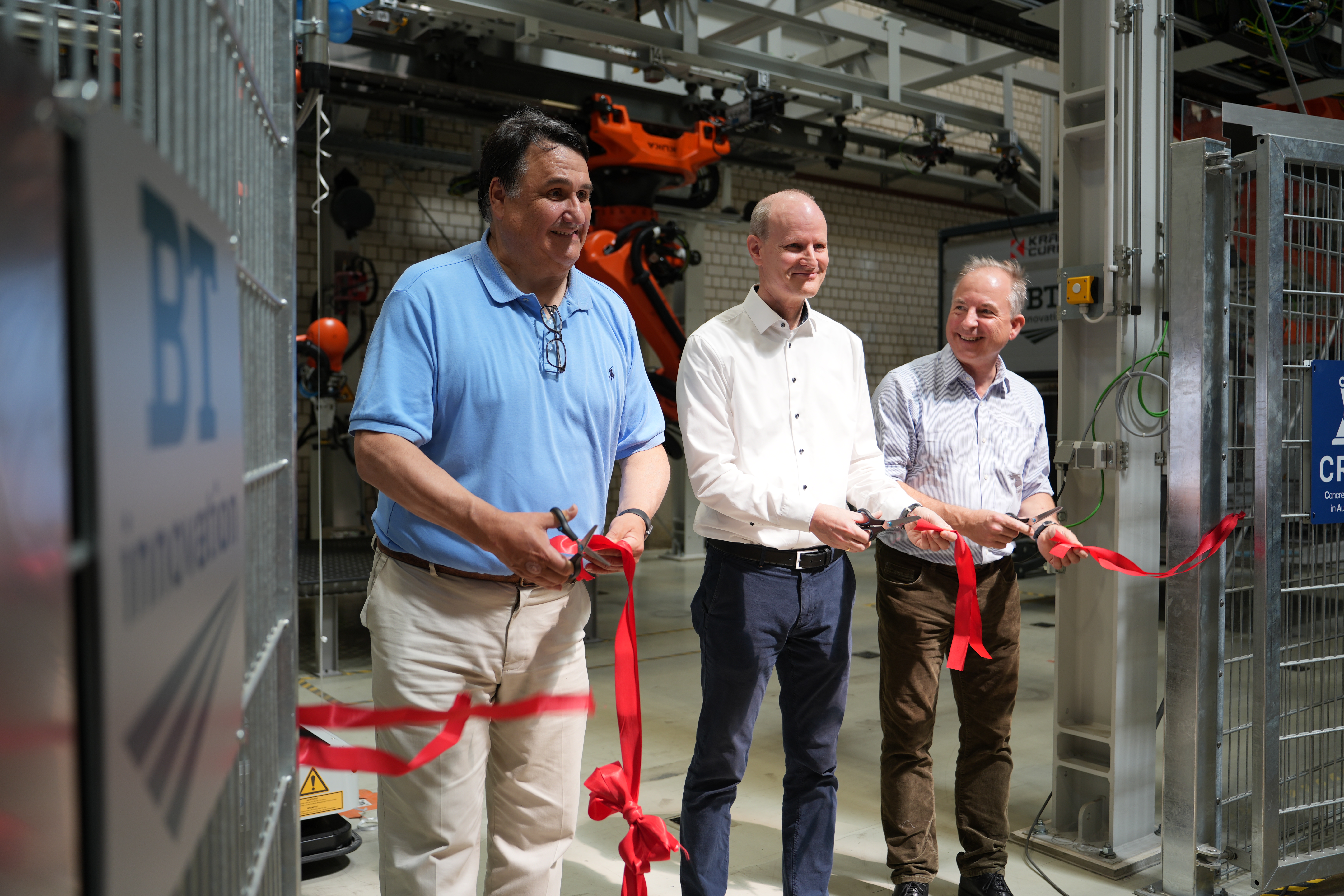
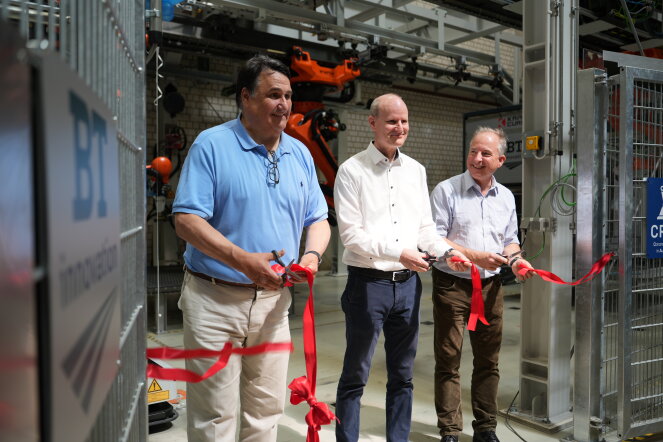
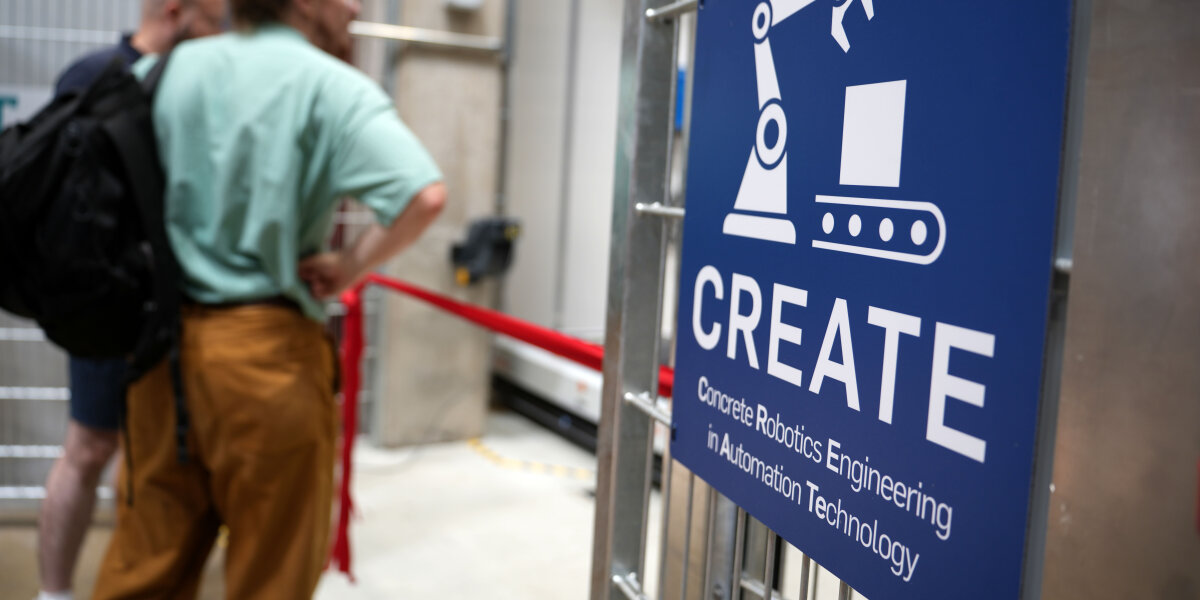
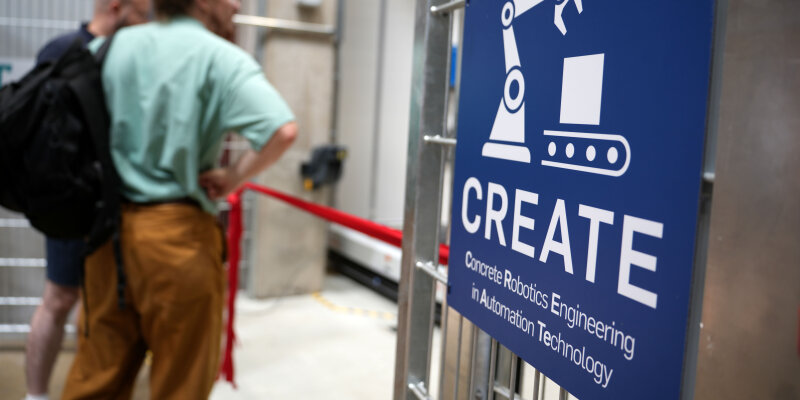
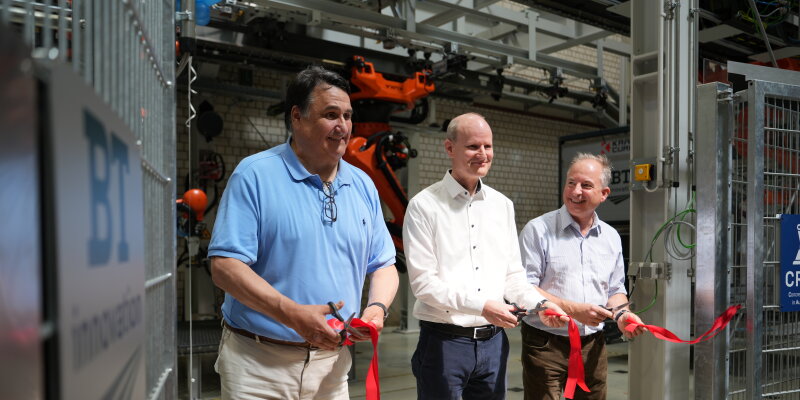
On July 15, 2026, CREATE (Concrete Robotics Engineering in Automation Technology), a large-scale research facility unique in the world, was inaugurated at the KIB-KON test hall. There, three industrial robots produce fully load-bearing concrete components in just three hours—a process that previously could take several weeks.
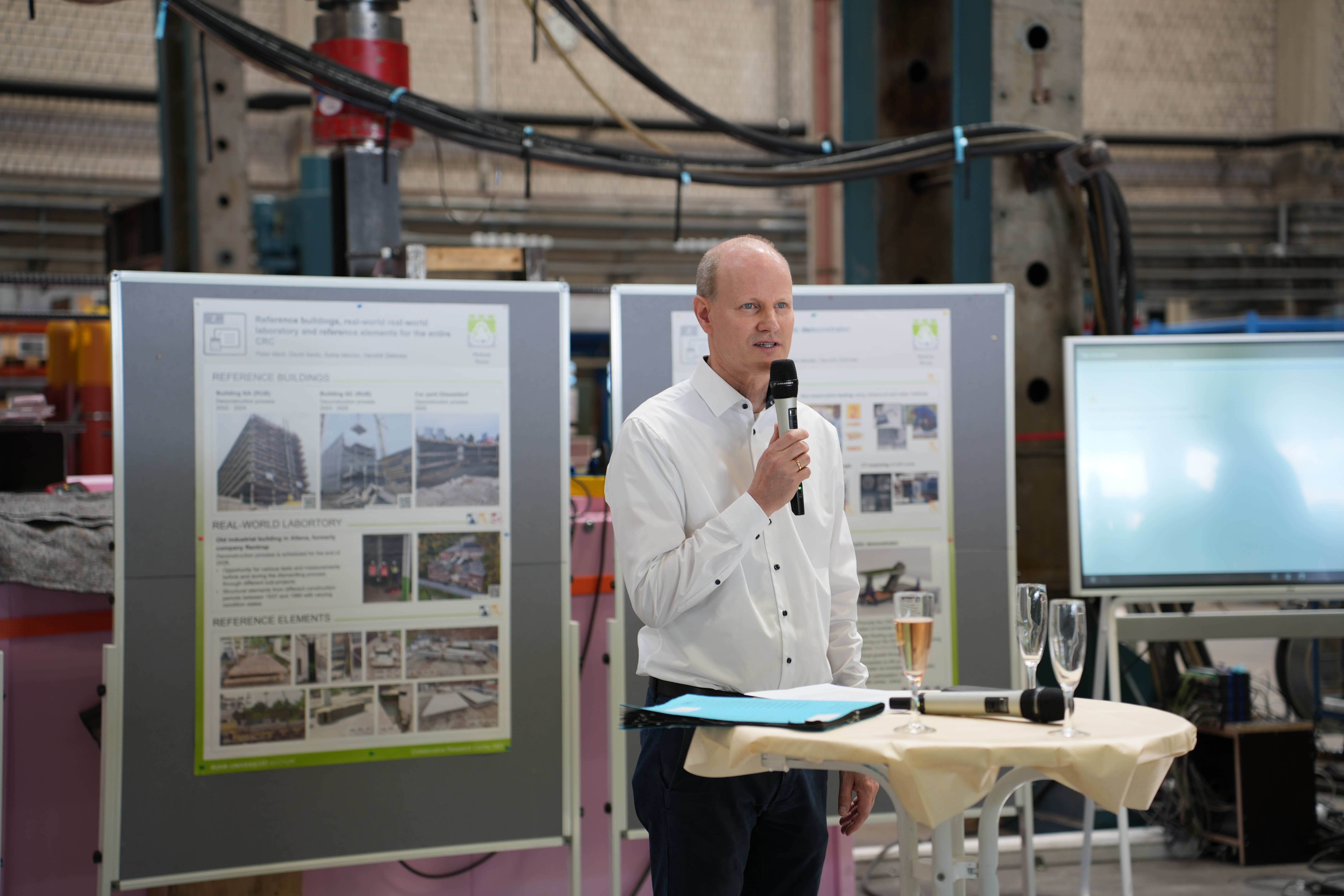
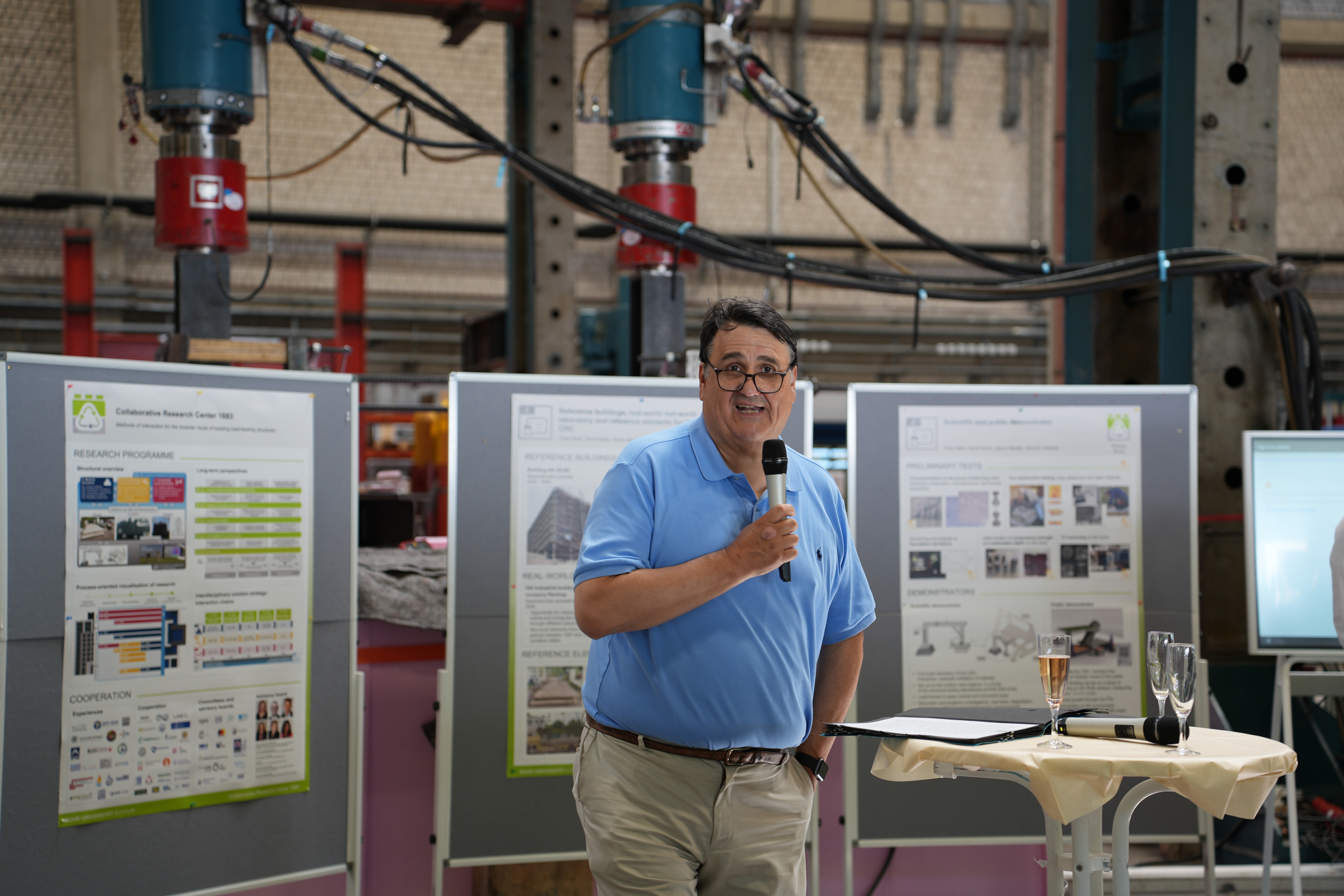
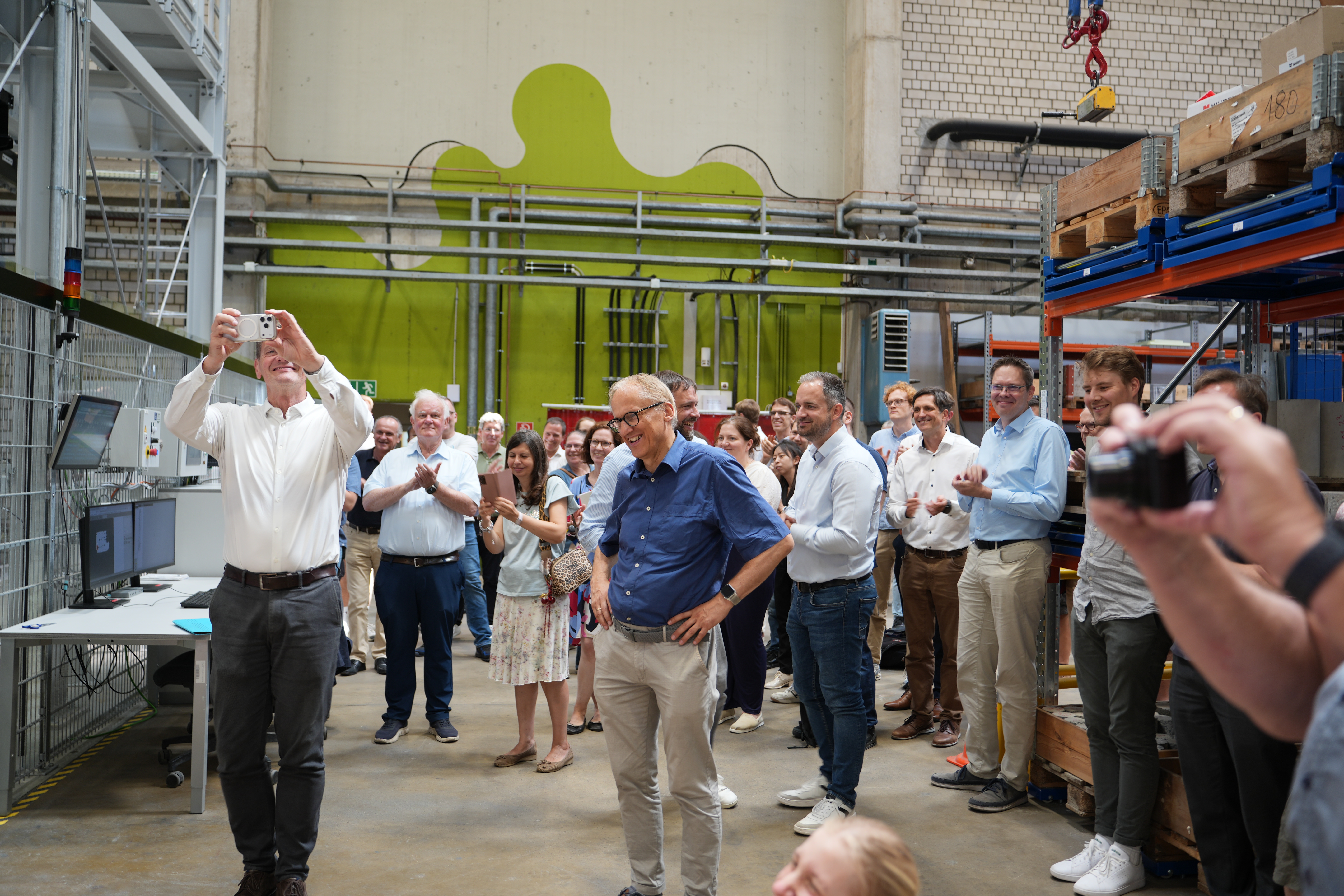
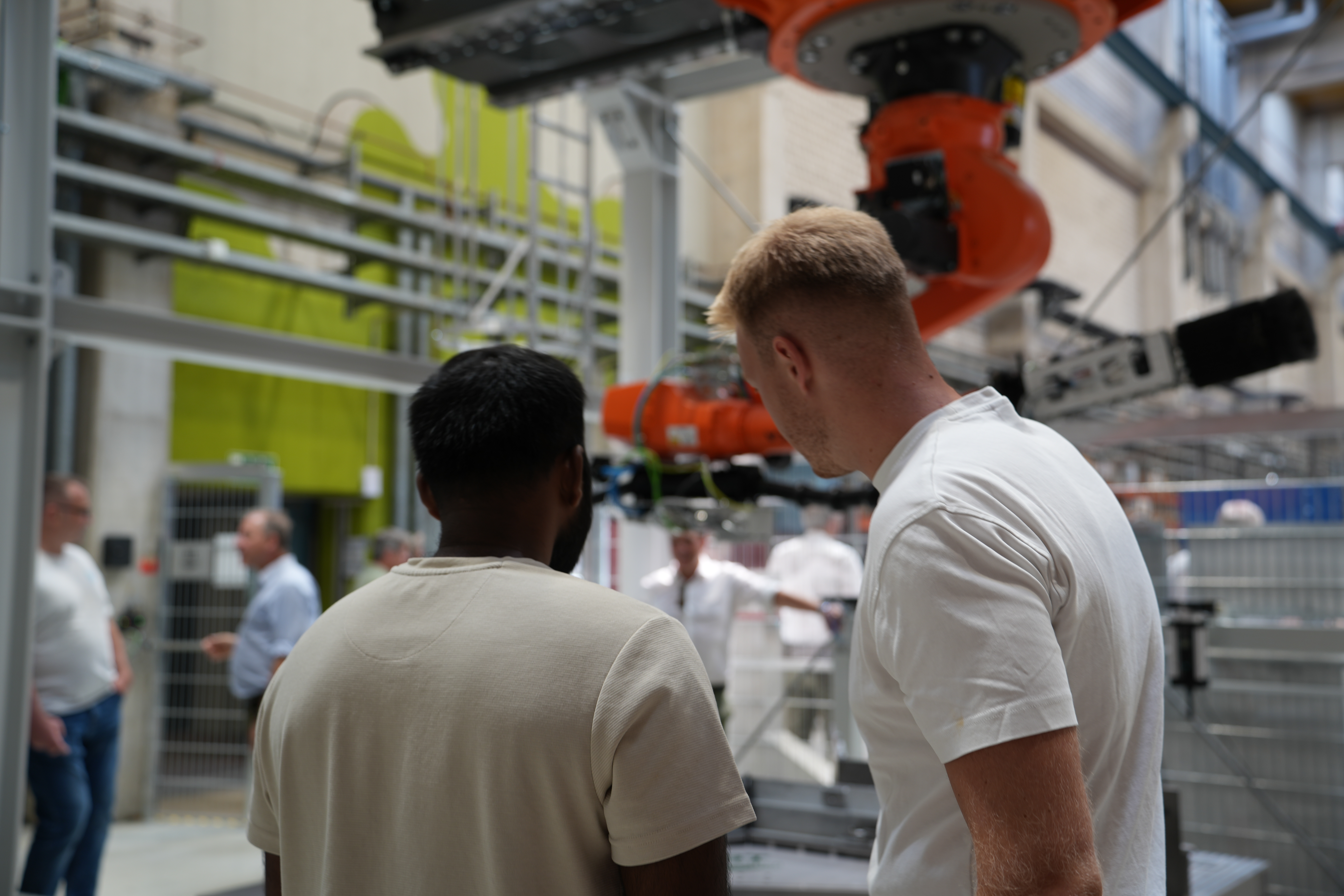
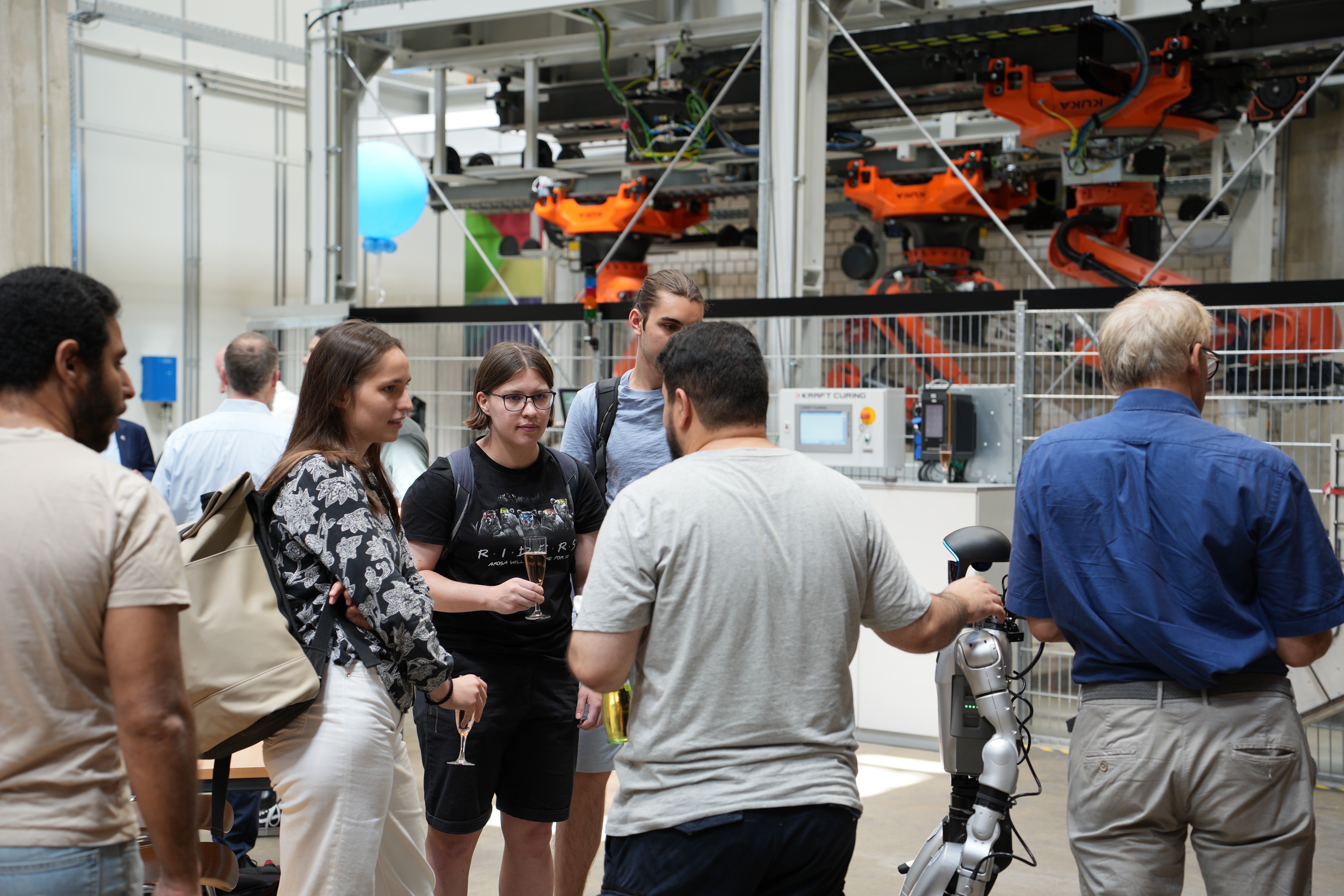
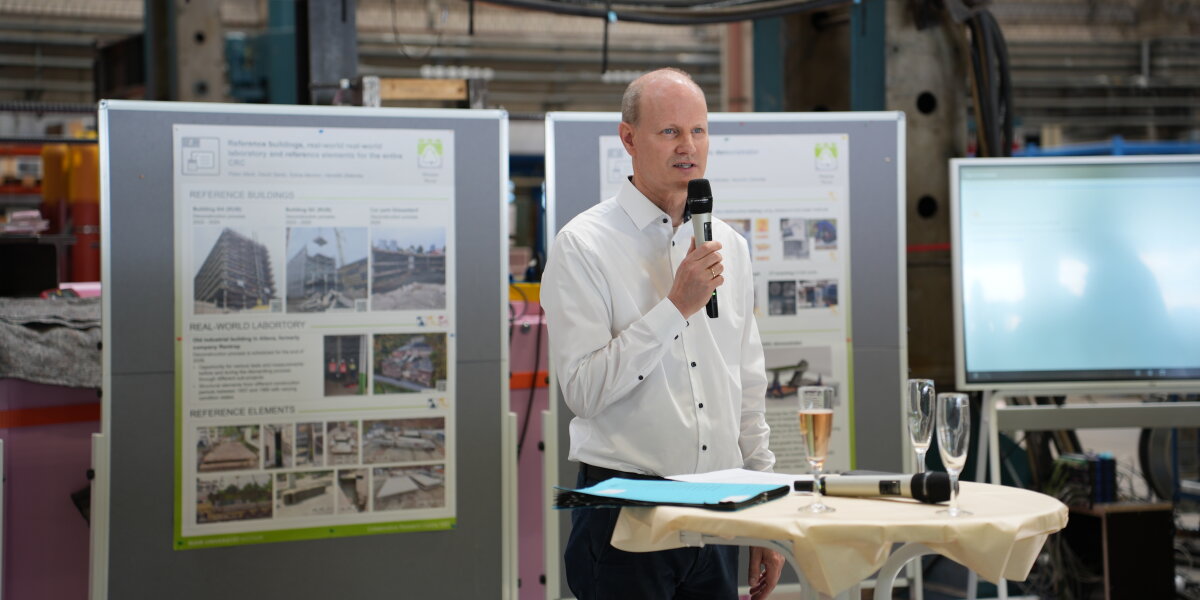
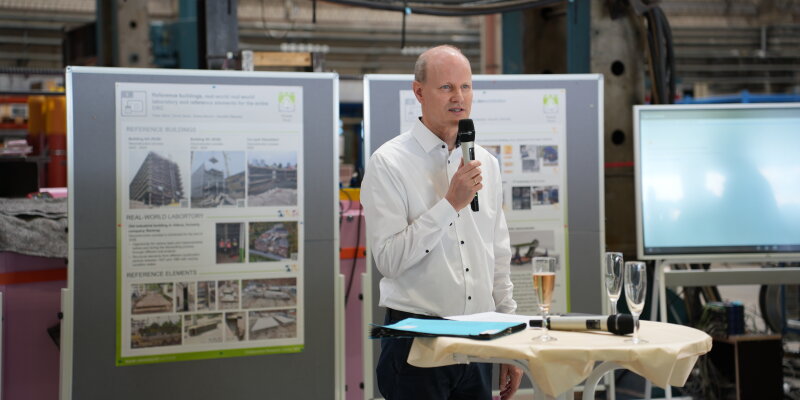
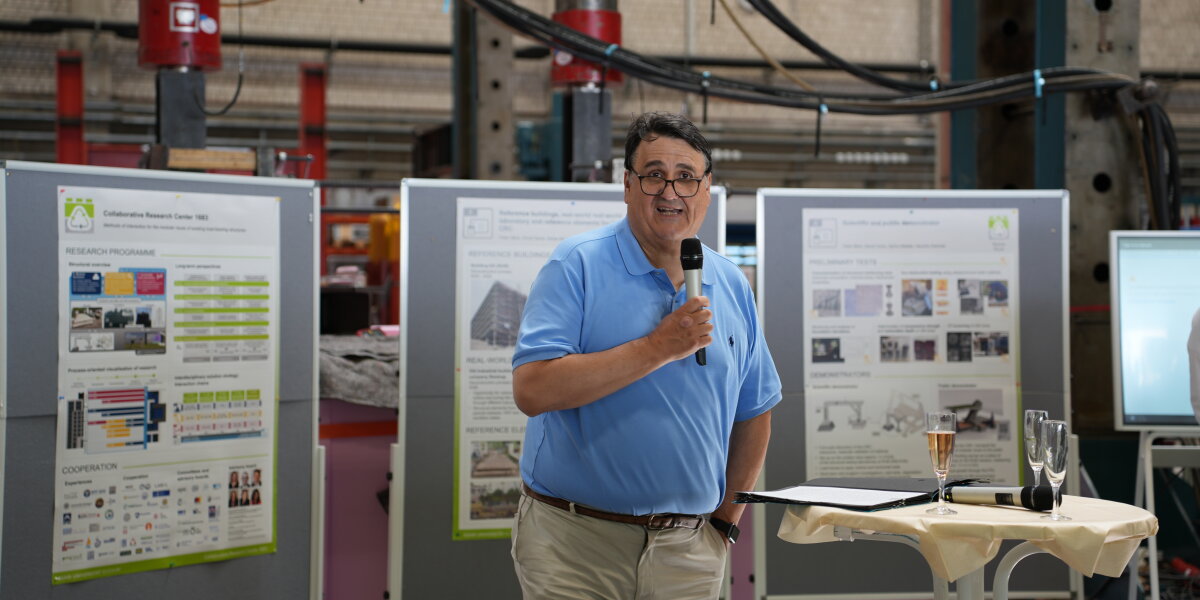
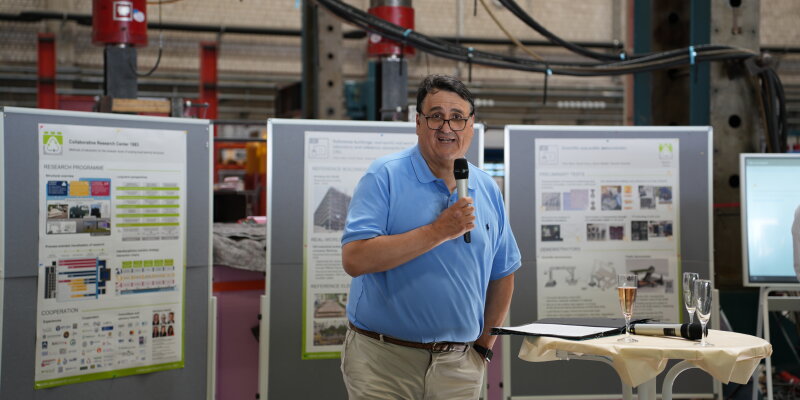
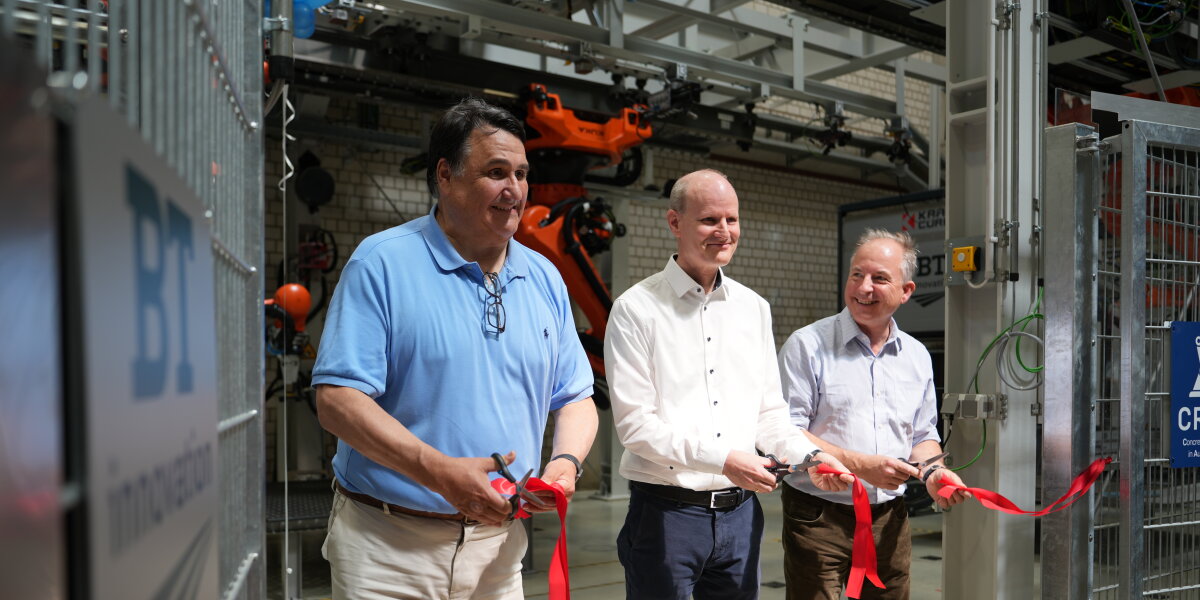
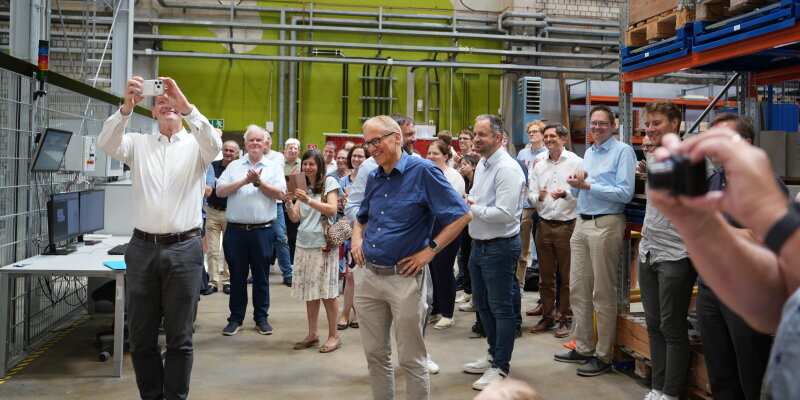
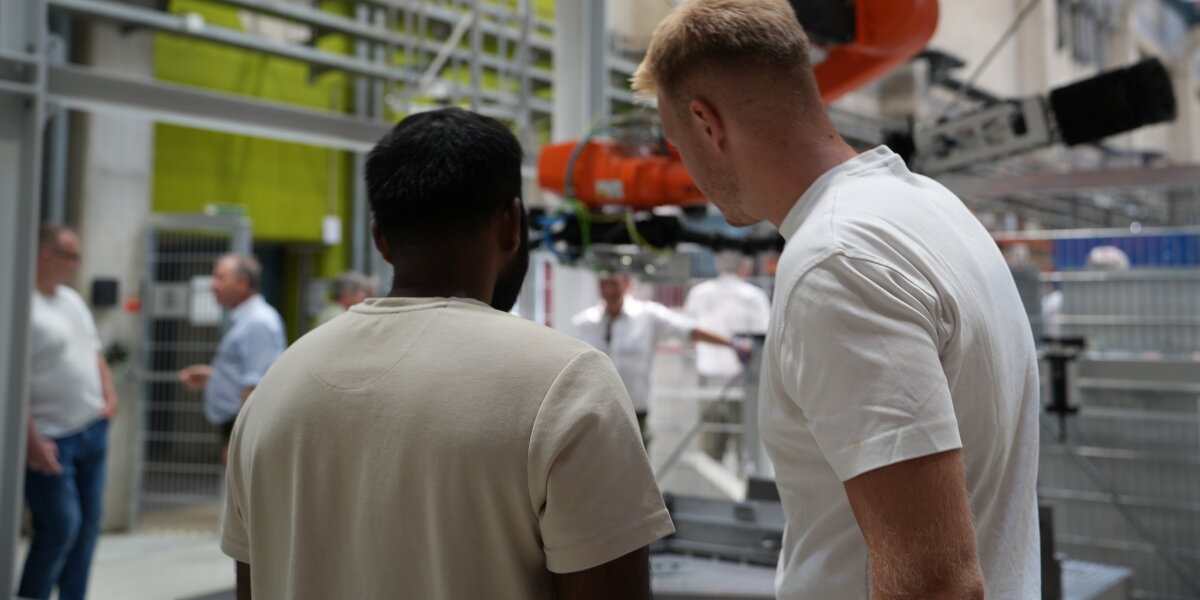
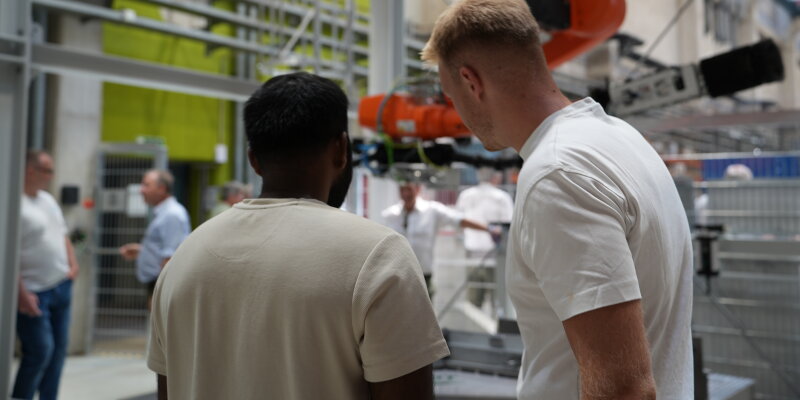
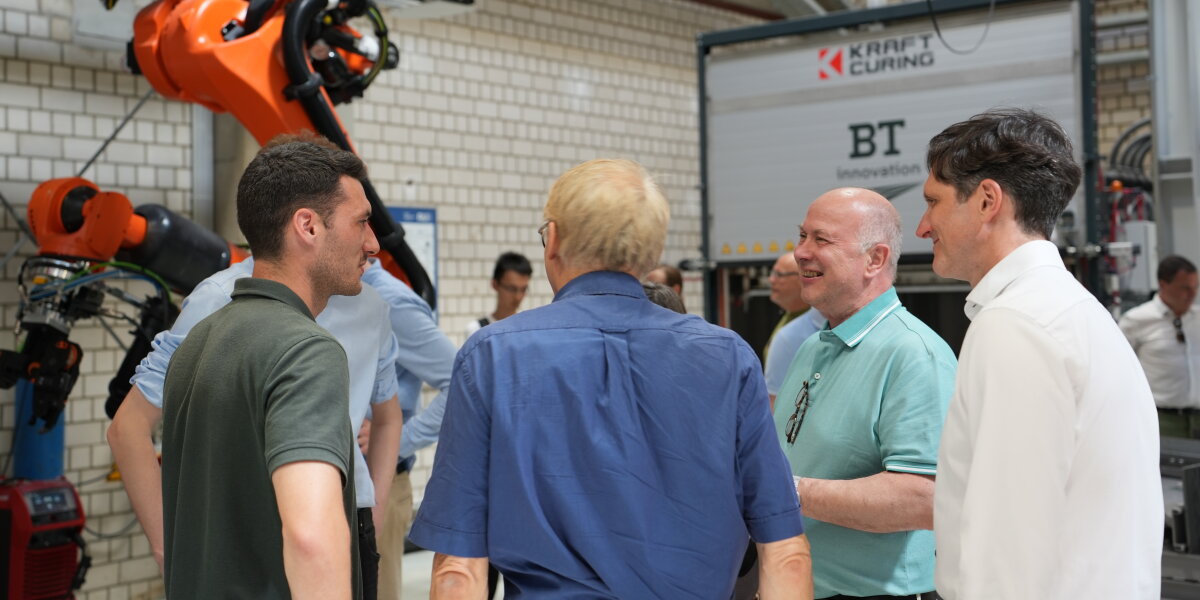
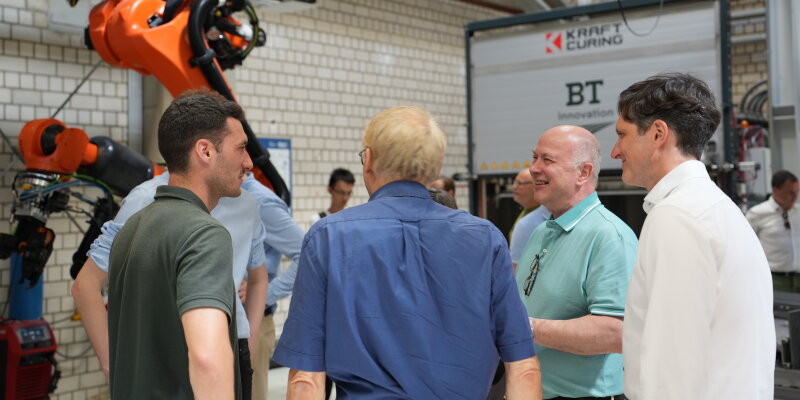
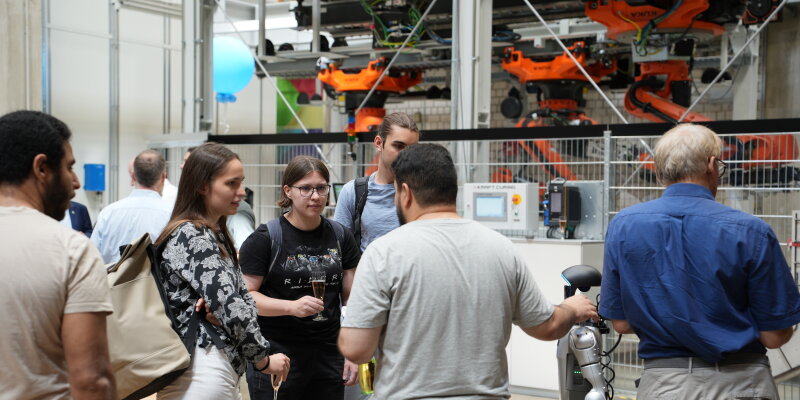
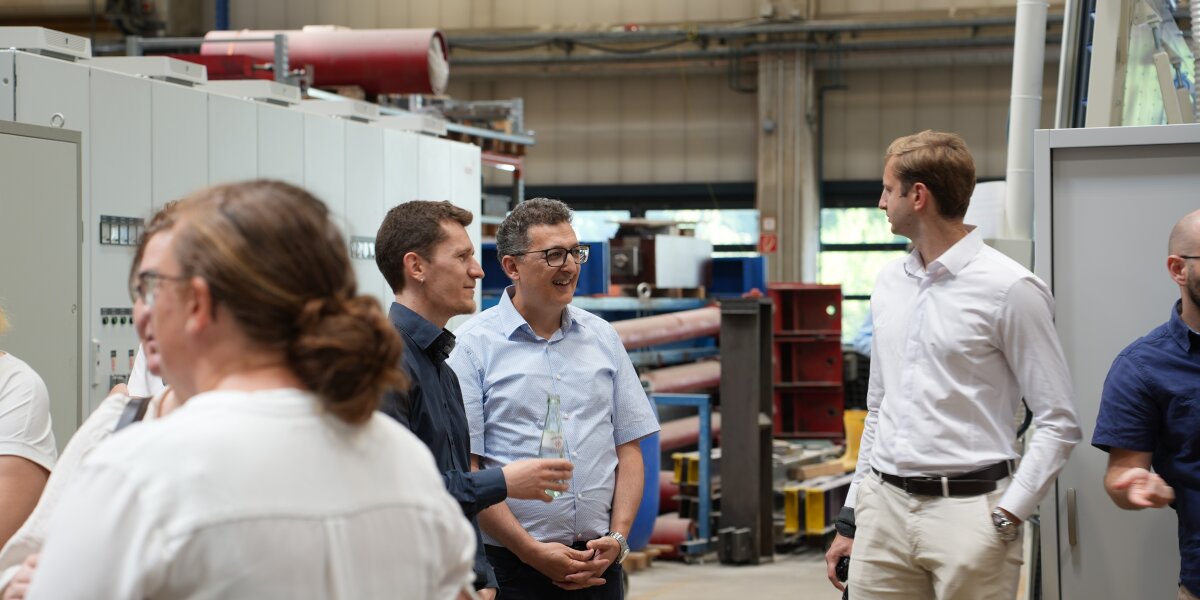
Numerous guests from academia and industry attended the inauguration of CREATE. Following welcoming remarks by Rector Prof. Dr. Martin Paul and Prof. Dr.-Ing. Peter Mark, head of the Chair of Solid Construction, the state-of-the-art research facility was officially put into operation. A live demonstration gave guests the opportunity to see the fully automated robotic system up close. The system automates the entire manufacturing process: it assembles the formwork, positions and ties the rebar, pours the concrete, and transports the component to a special oven for curing. Thanks to digital control, the robots operate with exceptional precision. At the same time, every step of the process can be digitally tracked.
With CREATE, the researchers aim to transfer manufacturing processes from mechanical engineering to the construction industry. The idea first emerged in 2020, reported Prof. Dr.-Ing. Peter Mark. A grant application for major equipment funding submitted to the German Research Foundation (DFG) was successful. Everyone involved—from the researchers and the RUB administration to the manufacturer BT Innovation—has shown great commitment.
The goal is to make construction processes significantly faster, more efficient, and more resource-efficient, as well as to address the shortage of skilled workers in the industry. In the long term, this could enable structures such as bridges or buildings to be completed in a much shorter time.
The new facility will initially be used for research and the optimization of automated construction processes on a laboratory scale. In addition, it is available for collaborative projects with industry partners and is also intended to be used in the future for the development and processing of reusable concrete components as part of the Collaborative Research Center “Modular Reuse.”
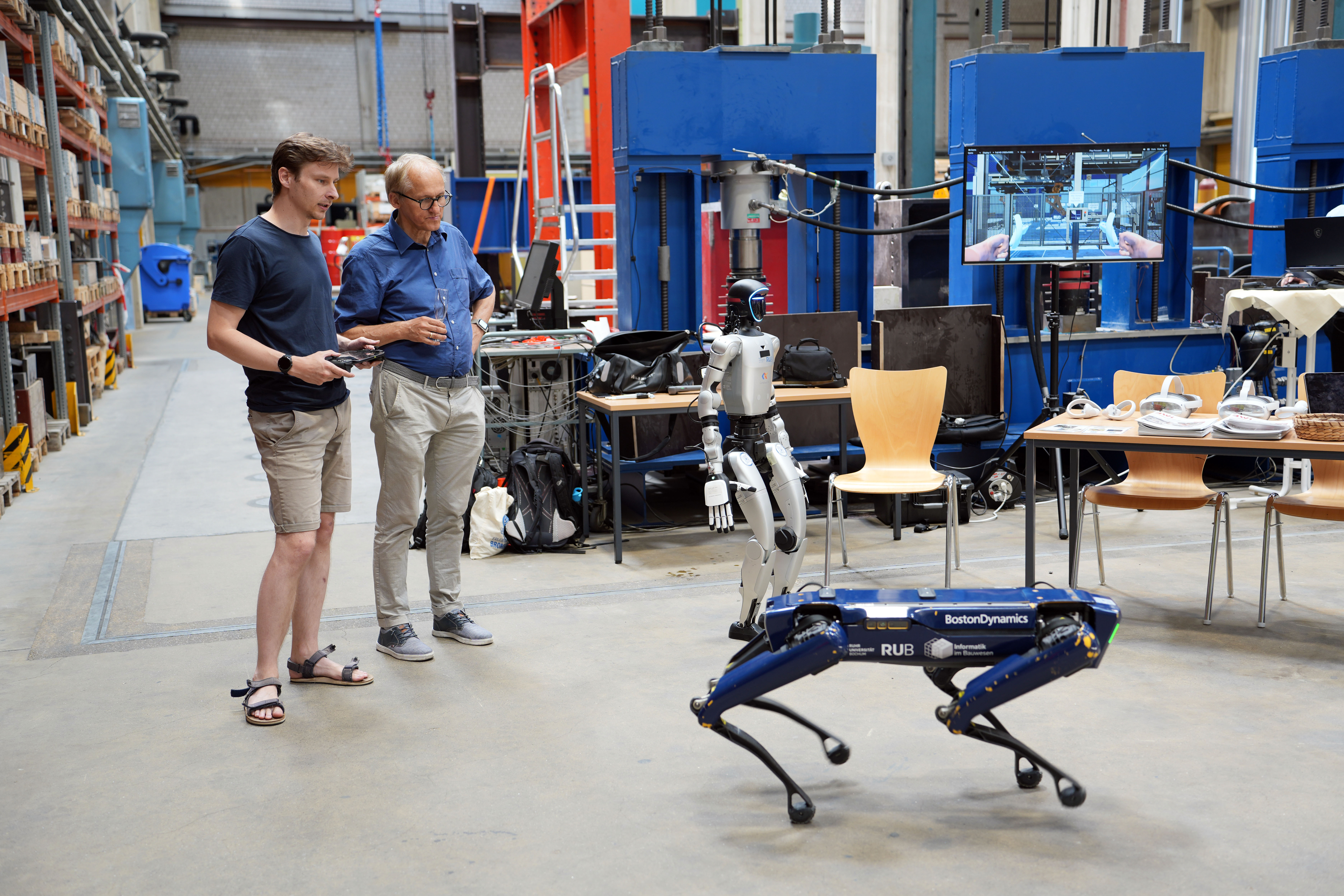
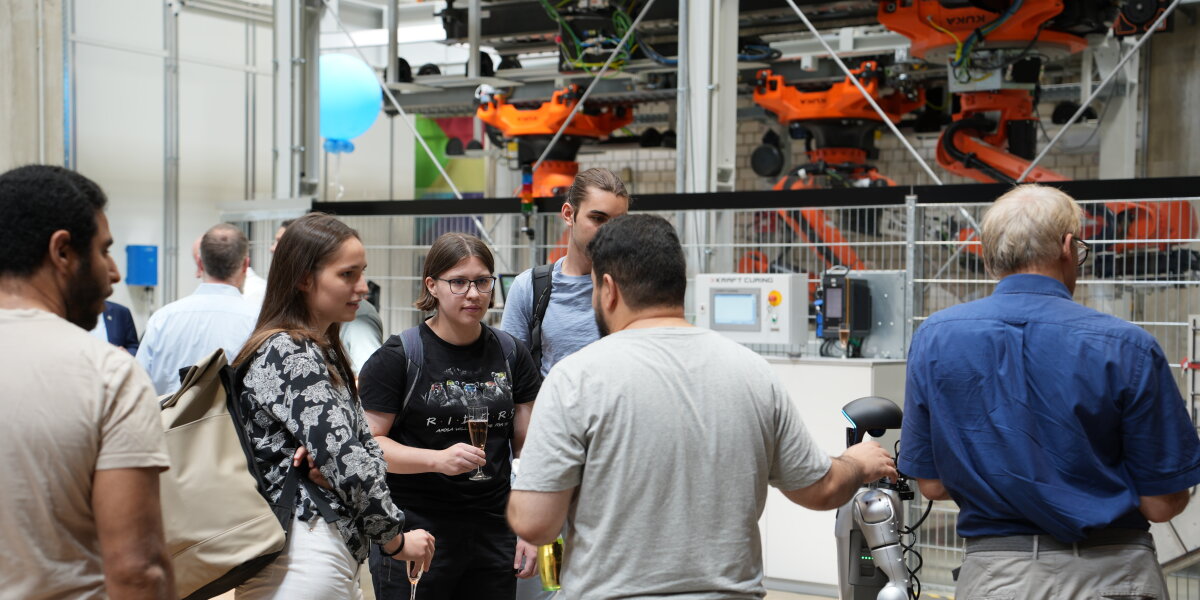
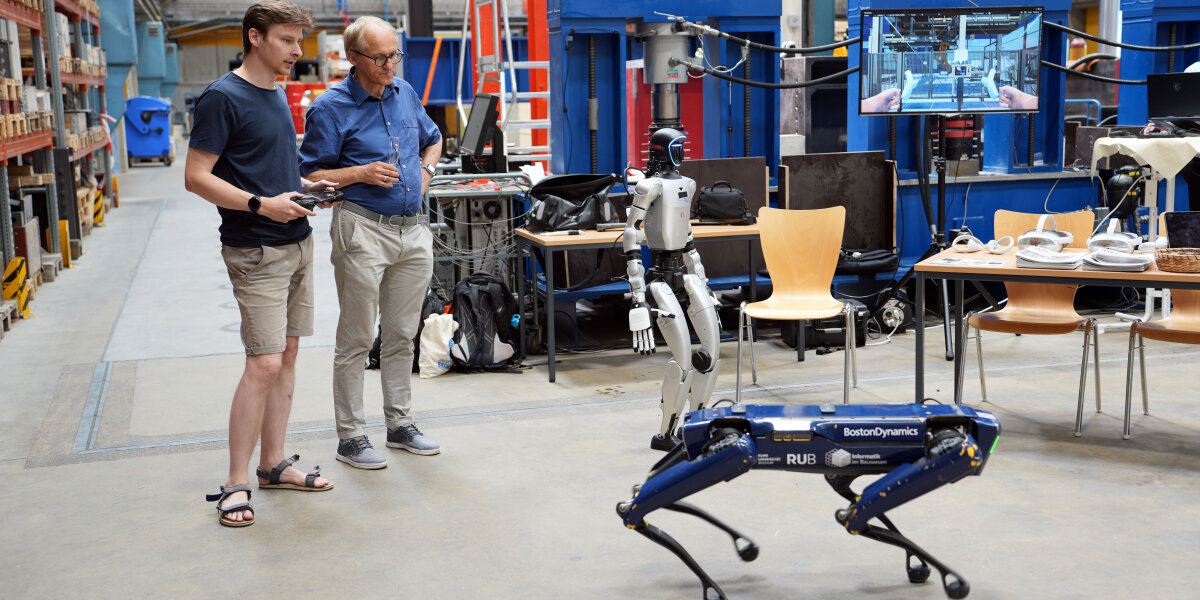
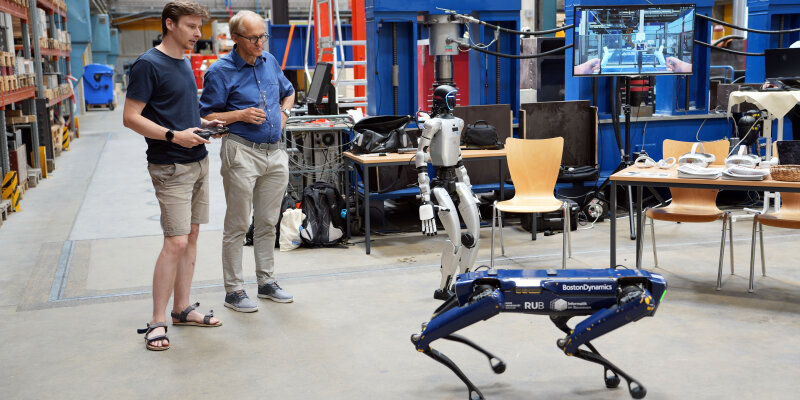
In addition, visitors gained insights into other research projects in the fields of robotics and augmented reality. The humanoid robot IIBra and the robot dog RUBy vividly demonstrated how modern technologies can support structural inspections and digital processes in the construction industry. Visitors also had the opportunity to virtually explore the large-scale research facility using VR goggles.
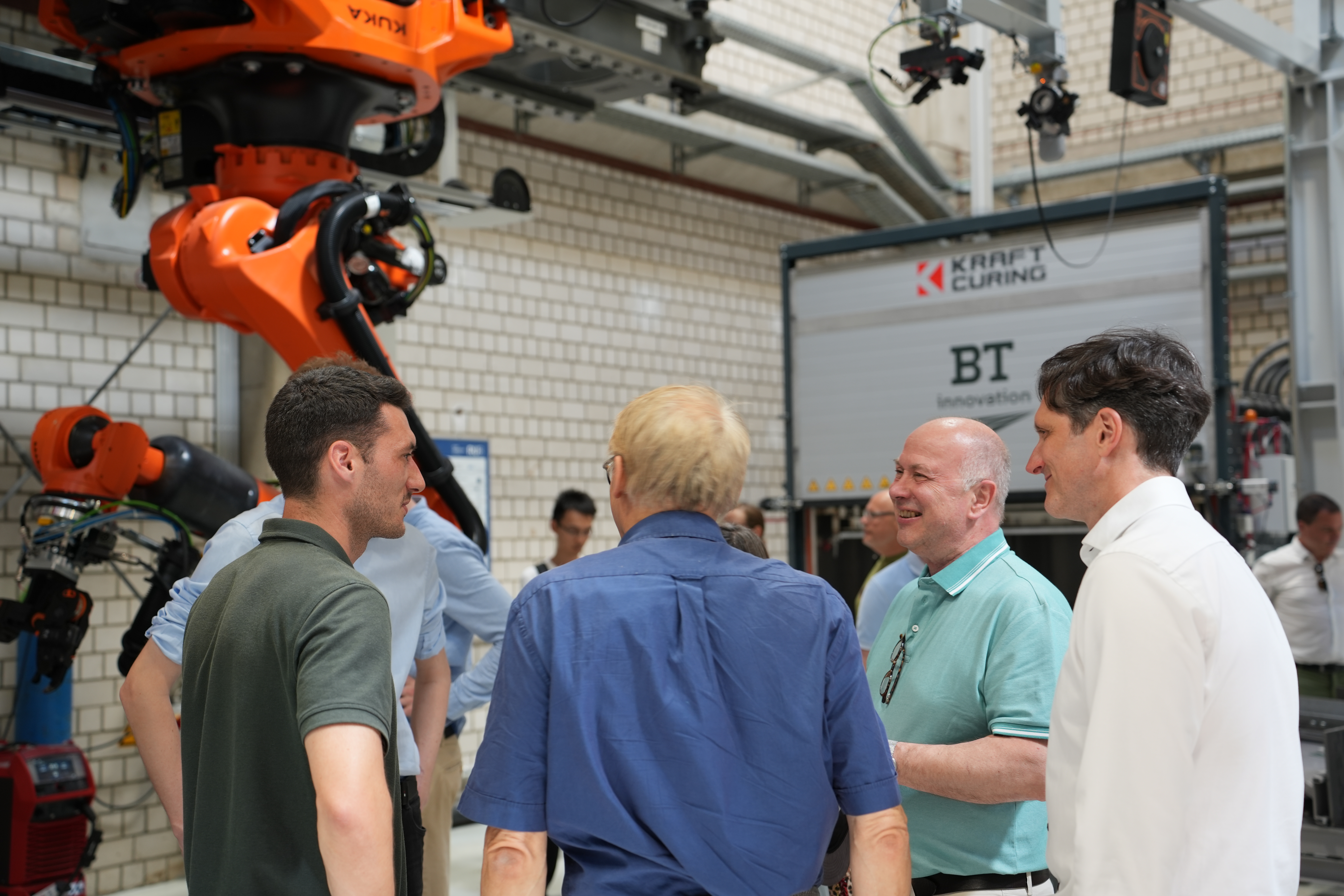
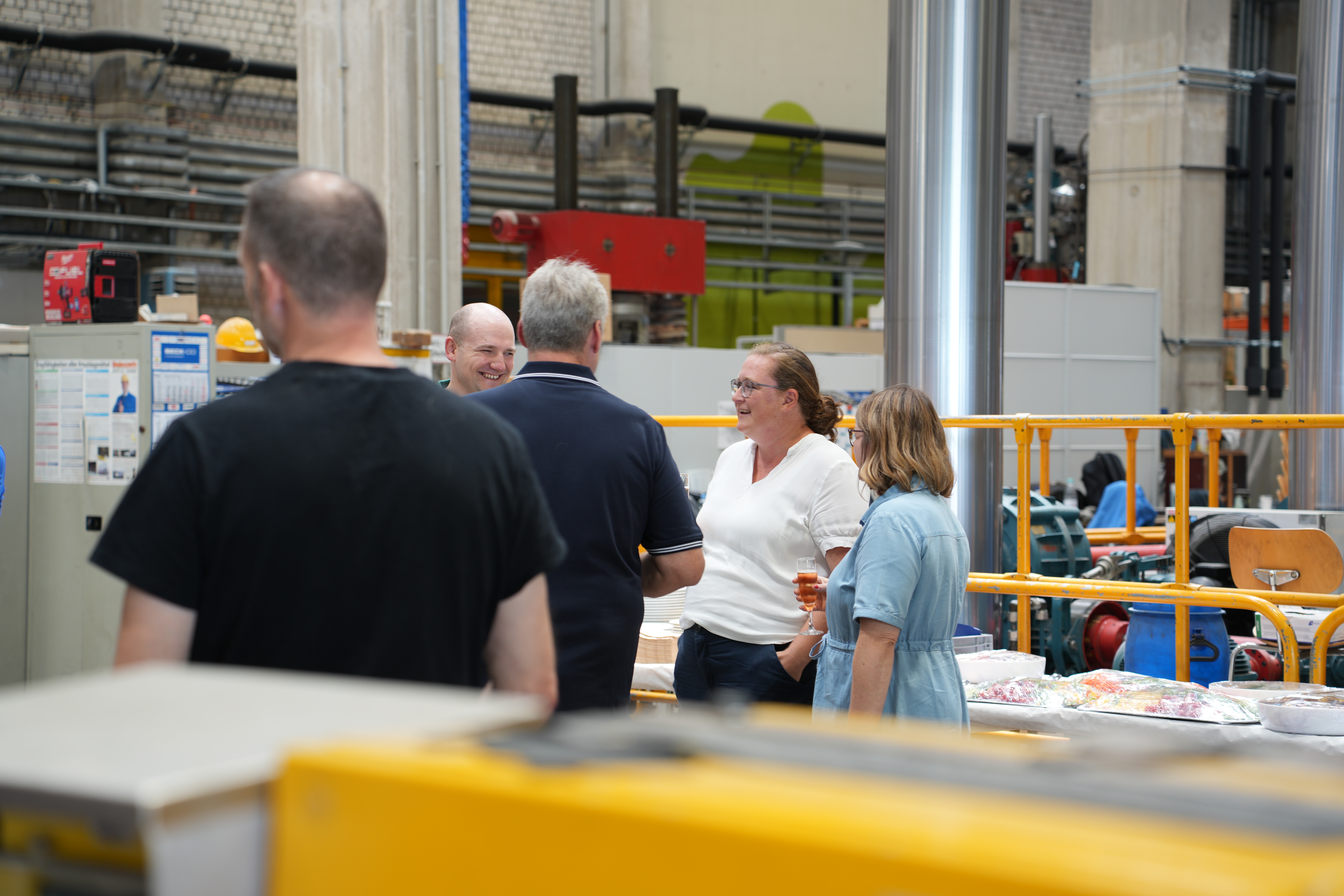
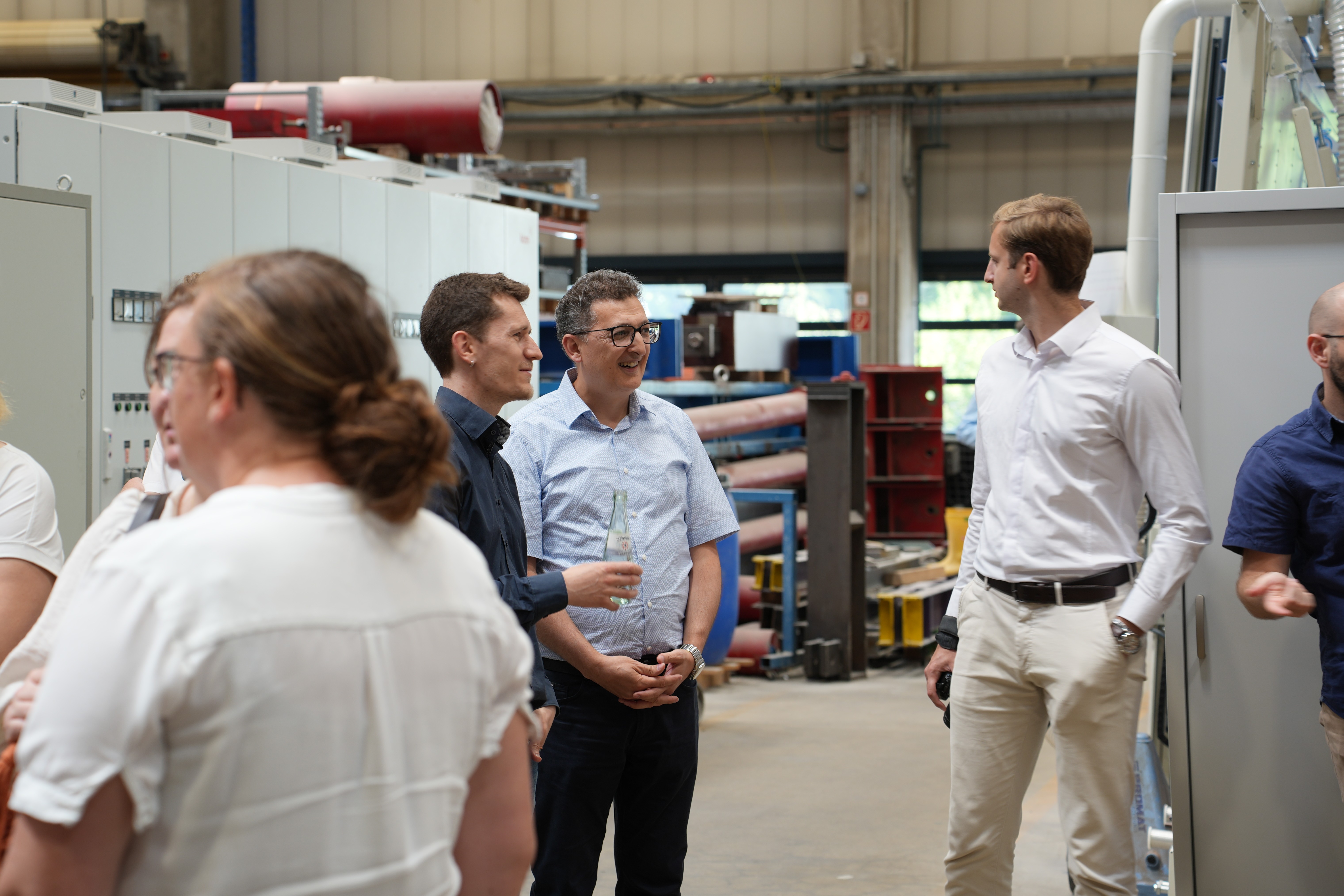
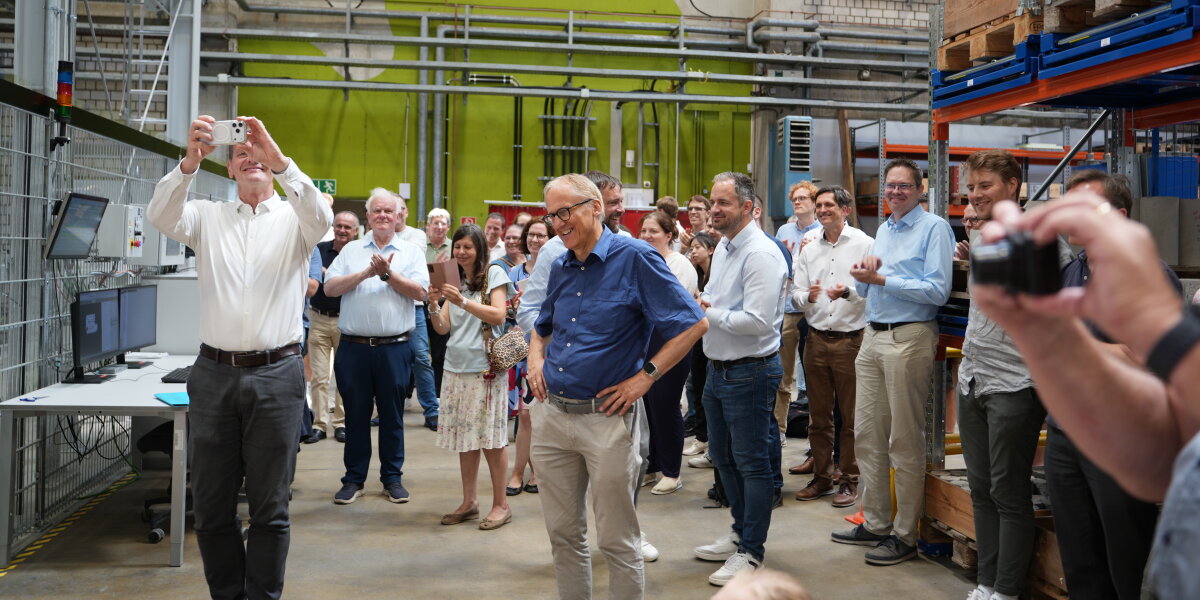
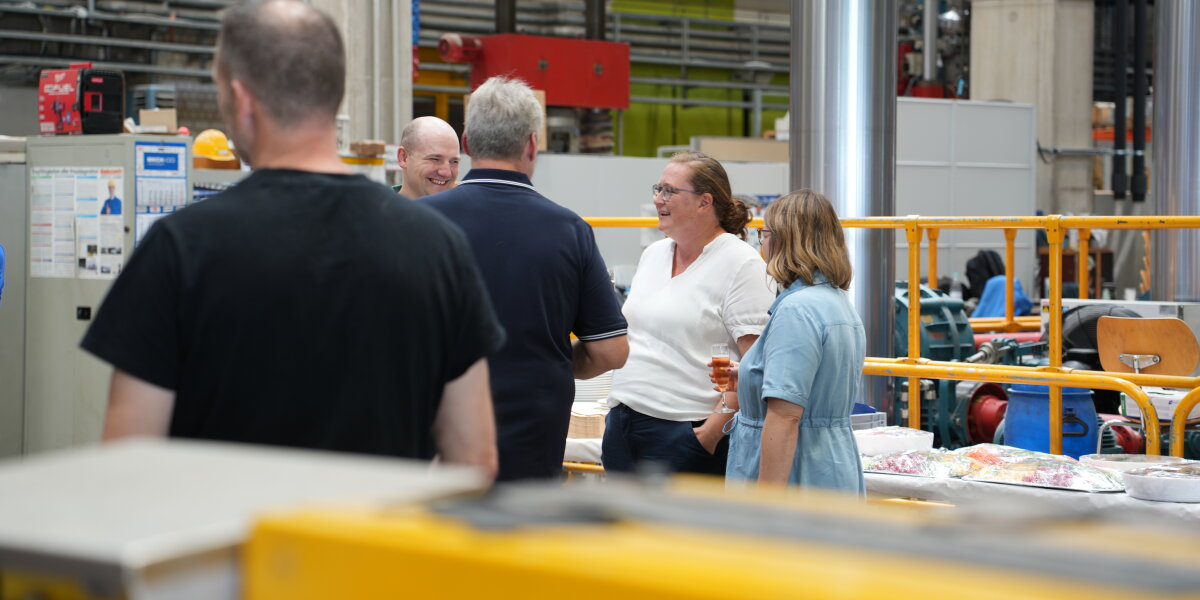
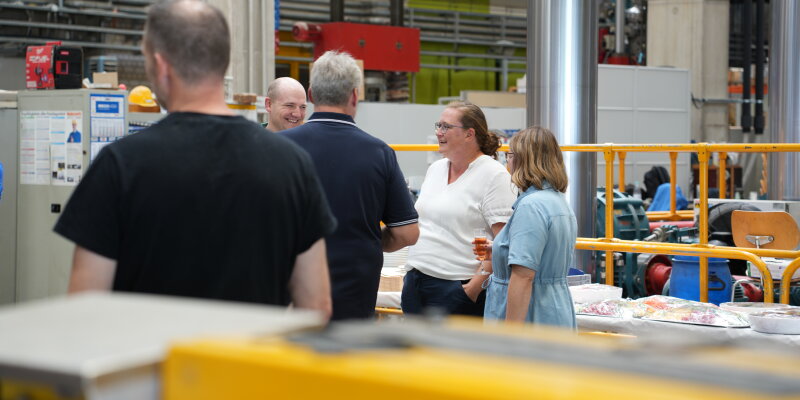
Following the inauguration ceremony, the traditional summer party hosted by the chairs of the Institute of Structural Engineering took place. With summery weather and a communal barbecue, there was ample opportunity for professional exchanges as well as personal conversations in a relaxed atmosphere.
Click here to read the article about the CREATE inauguration on the RUB News Portal.
On July 15, 2026, CREATE (Concrete Robotics Engineering in Automation Technology), a large-scale research facility unique in the world, was inaugurated at the KIB-KON test hall. There, three industrial robots produce fully load-bearing concrete components in just three hours—a process that previously could take several weeks.
Numerous guests from academia and industry attended the inauguration of CREATE. Following welcoming remarks by Rector Prof. Dr. Martin Paul and Prof. Dr.-Ing. Peter Mark, head of the Chair of Solid Construction, the state-of-the-art research facility was officially put into operation. A live demonstration gave guests the opportunity to see the fully automated robotic system up close. The system automates the entire manufacturing process: it assembles the formwork, positions and ties the rebar, pours the concrete, and transports the component to a special oven for curing. Thanks to digital control, the robots operate with exceptional precision. At the same time, every step of the process can be digitally tracked.
With CREATE, the researchers aim to transfer manufacturing processes from mechanical engineering to the construction industry. The idea first emerged in 2020, reported Prof. Dr.-Ing. Peter Mark. A grant application for major equipment funding submitted to the German Research Foundation (DFG) was successful. Everyone involved—from the researchers and the RUB administration to the manufacturer BT Innovation—has shown great commitment.
The goal is to make construction processes significantly faster, more efficient, and more resource-efficient, as well as to address the shortage of skilled workers in the industry. In the long term, this could enable structures such as bridges or buildings to be completed in a much shorter time.
The new facility will initially be used for research and the optimization of automated construction processes on a laboratory scale. In addition, it is available for collaborative projects with industry partners and is also intended to be used in the future for the development and processing of reusable concrete components as part of the Collaborative Research Center “Modular Reuse.”
In addition, visitors gained insights into other research projects in the fields of robotics and augmented reality. The humanoid robot IIBra and the robot dog RUBy vividly demonstrated how modern technologies can support structural inspections and digital processes in the construction industry. Visitors also had the opportunity to virtually explore the large-scale research facility using VR goggles.
Following the inauguration ceremony, the traditional summer party hosted by the chairs of the Institute of Structural Engineering took place. With summery weather and a communal barbecue, there was ample opportunity for professional exchanges as well as personal conversations in a relaxed atmosphere.
Click here to read the article about the CREATE inauguration on the RUB News Portal.
You can find more information about the large-scale research facility here.
Copyright © fbi 2026
Last update: Jul 20, 2026